

.svg)
You might think that reshoring manufacturing with advanced automation means fewer technicians needed on the floor. But plant managers bringing production back to the U.S. are facing the opposite problem: they're scrambling to find technicians equipped for smart factories. The automation onshoring technician roles emerging across reshored facilities demand skills that barely existed five years ago. As facilities onshore with robotics, programmable logic controllers (PLCs), and integrated automation networks, the technician roles that filled shop floors for decades are being reshaped entirely. The challenge isn't automating people out of jobs -- it's finding people for automation workforce demand that traditional talent pipelines can't meet.
Unmudl connects manufacturers to technician training through the Skills-to-Jobs marketplace, and the data is clear: manufacturers reshoring automated facilities report 40% shorter technician ramp times when hiring workers trained in controls and systems integration. But they also report a skills shortage that's accelerating. Automation isn't replacing technicians; it's transforming them into something different and more valuable.
Manufacturing automation isn't new. What's new is the scale and speed of onshoring paired with smart, networked systems. When a facility reshores with modern automation, it's not replicating a 1990s factory -- it's building systems that integrate robotics, IoT sensors, real-time monitoring, and adaptive controls. That fundamentally changes who works there and what they do.
A technician in a traditional facility might specialize in mechanical maintenance or electrical troubleshooting. A technician in an automated facility does both, plus systems integration, network diagnostics, and predictive analytics. They're not waiting for machines to fail and fixing them afterward; they're reading sensor data, interpreting alarms, and preventing downtime before it costs money.
This isn't speculation. Manufacturers with onshored automated production report that technicians spend their first working hours monitoring dashboards and interpreting control outputs, not turning wrenches on a single machine. The skill set has shifted from "know your equipment" to "understand your systems." A technician who can diagnose a network issue or reprogram a control sequence earns differently than one who performs routine maintenance on a single machine.
The factory automation workforce impact becomes visible at the regional level. When manufacturing onshores to regions without a deep technician bench (parts of the Midwest, the South, Texas), employers can't wait for community colleges to ramp up multi-year programs. They need technicians now. That pressure drives demand for accelerated training pathways and employer-designed curricula that skip unnecessary theory and focus on immediate job readiness.
To understand what's changing, compare the two profiles side by side.
The salary differences reflect market reality. A smart manufacturing technician with controls expertise earns at the higher end of the technician band, often approaching engineering-technician rates -- a premium that reflects the scarcity of the skill set and the value technicians create by preventing downtime.
Entry pathways also diverge. A traditional technician might have come from a manufacturing family or discovered the trade through high-school shop classes. A smart manufacturing technician is more likely to be a career changer -- someone with analytical skills or IT fundamentals drawn to hands-on technical work. They come from diverse backgrounds because the field is new and actively recruiting.
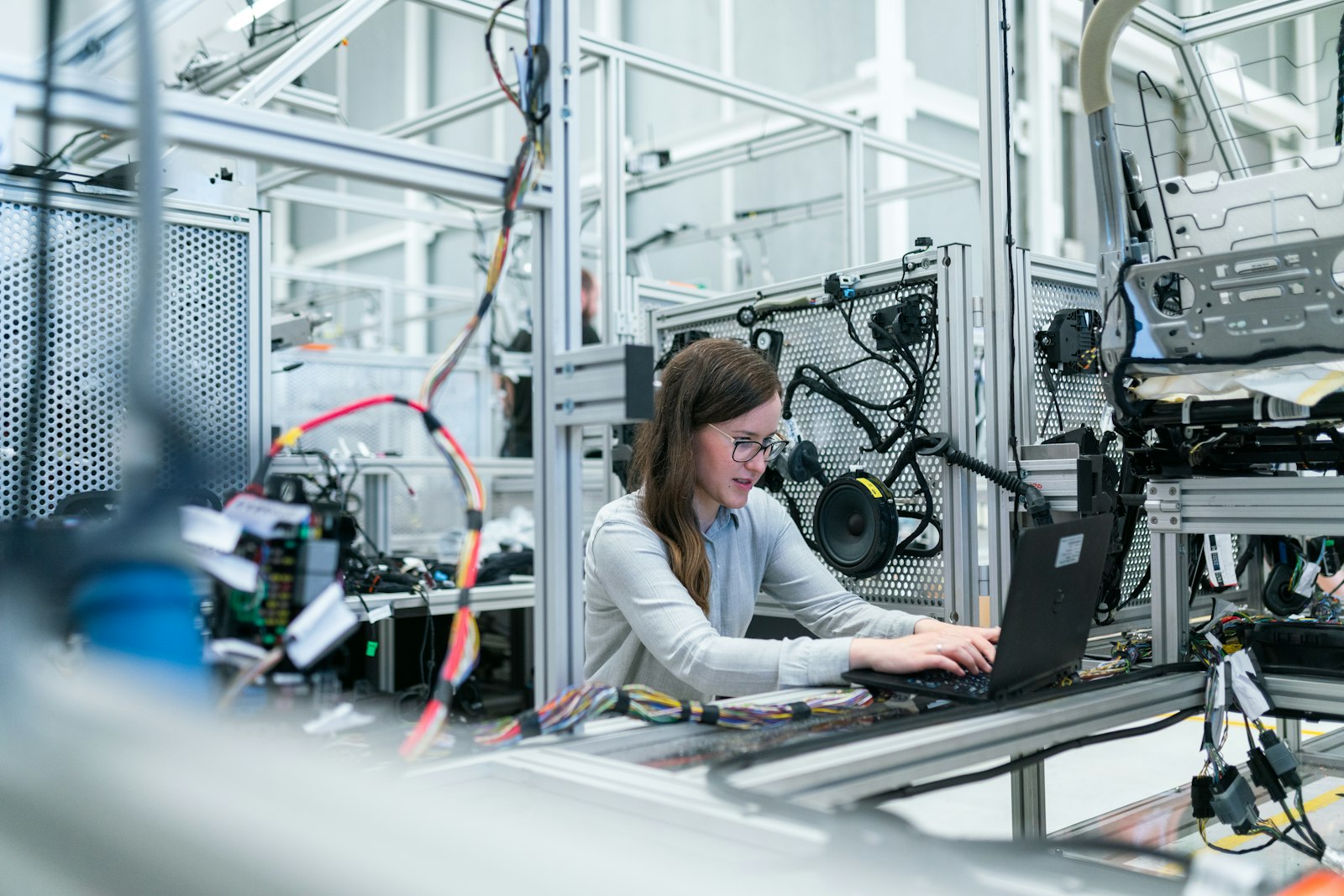
Automation onshoring technician roles represent evolution, not elimination. When automation doesn't eliminate technician positions, it creates new ones and reshapes others. Here are the roles emerging or evolving as manufacturers onshore smart production:
Traditional roles persist -- mechanical technicians, electrical technicians, maintenance coordinators -- but they're being repositioned as specialists within the larger automation ecosystem. A facility might employ ten controls technicians but only two pure mechanical technicians, where the math was reversed twenty years ago.
The factory automation workforce impact becomes concrete when you assess what's actually missing from regional talent pipelines. Most community college industrial programs still emphasize mechanical and electrical fundamentals. Those foundations matter -- but students graduate with minimal hands-on experience in PLCs, motion control, network diagnostics, or sensor integration. When they enter a smart facility, they require months of ramp-up that employers with compressed timelines can't absorb.
The gap isn't lack of intelligence -- it's lack of applied experience with specific tools and systems. A high-school graduate with strong math skills and an interest in problem-solving can become a controls technician with the right training. But that training must include industrial automation tools, network fundamentals, and real-world troubleshooting. General "electrical" training doesn't cut it.
Regional talent pools compound the problem. When a facility reshores to a region without established manufacturing infrastructure, there's no local bench to draw from. Germany, Japan, and South Korea solved this through apprenticeship networks and employer-led training; the U.S. is rebuilding that infrastructure now, but it lags behind automation workforce demand.
Every facility runs different automation platforms -- Siemens PLCs, Allen-Bradley, or custom systems. Technicians can't be trained on every platform, but they can be trained on principles and then learn facility-specific systems on the job in weeks, not months. The gap is in foundational skills: Does the candidate understand how a PLC executes logic? Can they read an electrical schematic? Can they use diagnostic software? If the answer is no to any of these, they're not ready for automated production, regardless of work ethic. The pipeline gap also reflects a timing mismatch -- employers need technicians in Q1 when production ramps, but community college cohorts graduate on a fixed schedule. Accelerated training through employer partnerships can respond to that pressure.
This is where manufacturing strategy meets workforce planning. Automation improves efficiency and resilience, but automation workforce demand for skilled technicians requires careful planning. Here's how employers successfully manage the balancing act:
Employers who execute this well share a pattern: they start pipeline work early, leverage employer partnerships for accelerated training, invest in regional infrastructure, and treat technician development as a competitive advantage, not an afterthought.

The smart manufacturing technician skills shift isn't just about learning new tools; it's about how technicians think about their work. In traditional manufacturing, troubleshooting follows a predictable pattern: machine fails, technician responds, repair happens. In smart manufacturing, technicians monitor real-time data, predict failures before they occur, optimize processes based on performance analytics, and collaborate with engineers on continuous improvement.
This shift changes how you hire and train. You're no longer looking only for experienced technicians with ten years on assembly lines; you're looking for people with analytical capability, comfort with technology, and curiosity about how systems work. That might be a recent high-school graduate, a career changer from IT, or a traditional technician willing to retrain. The background matters less than the mindset.
It also changes how technicians advance. In smart manufacturing, technicians can move into controls engineering, systems design, data analysis, or process optimization. The technical career path is steeper and faster -- a controls technician with five years of experience might be managing automation projects or mentoring multiple technicians. Starting salary for a controls technician is higher than a traditional technician, and growth is faster too; a technician advancing into a specialist or supervisory role can reach six figures within ten years. That's a real incentive for talent development and retention.
Join the Manufacturing America Coordination
Reshoring automation is no longer a single-employer problem; it's an industry coordination challenge. Manufacturing America brings together state and regional manufacturing councils, employer coalitions, and workforce partners to align on skill standards, pipeline strategy, and shared training infrastructure. If your facility is reshoring or expanding automation, connecting with your state's manufacturing council can accelerate technician recruitment and reduce ramp-up time. Explore employer-designed technician training and engage with your regional manufacturing authority to coordinate broader pipeline strategy.
Use this framework to diagnose whether your facility's automation strategy and technician pipeline are aligned (this isn't a validated instrument, just a conversation starter).
Automation Complexity Score (rate 1 to 5 for each):
Technician Availability Score:
Readiness interpretation: If your automation score is high and your technician score is low, you face high risk -- production is complex but your talent pipeline is weak, so invest heavily in training partnerships and accelerated programs before production ramps. If both scores are high, you're ready; maintain retraining to avoid skill erosion. If both scores are low, risk is moderate: you can tolerate longer ramp times, and standard community college training plus on-the-job learning is sufficient. This diagnostic isn't meant to be precise -- it's meant to force the conversation. If your automation is complex and your technician pipeline is weak, address it now, before production launch.
Automation and onshoring are reshaping technician roles faster than talent pipelines can respond. The factories coming online in 2026 need controls technicians, mechatronic specialists, and systems troubleshooters -- roles that barely existed in traditional manufacturing. The employers winning the reshoring race aren't those with the most robotics; they're those with the talent to operate it.
If your facility is reshoring with automation, start pipeline planning now. Partner with accelerated training programs and engage with your state or regional manufacturing authority to coordinate skill standards and recruitment. The factory automation workforce impact isn't abstract -- it's measured in downtime, product quality, and production schedule. Automation doesn't fail because machines break; it fails because the people who fix them aren't trained. Your competitive advantage in reshoring isn't the robots themselves -- it's the technicians who make them work.

Navigate reshoring finance: CHIPS Act grants, IRA tax credits, WOTC subsidies, and state programs explained. Maximize your manufacturing expansion ROI.


Build career pathways that reduce reshored-facility turnover by 40%. Learn succession planning, training ROI, and 24-month advancement strategies today.
Manufacturers evaluate single-location reshoring vs. regional hub models across the U.S., Mexico, and Canada. Compare costs, supply-chain resilience, and workforce strategy.


.svg)