

.svg)
It's 6 AM on a semiconductor fab floor. A technician in protective gear scans predictive maintenance logs on a tablet, reviewing data that flags when equipment will likely fail. They've got eight minutes to diagnose why a multi-million-dollar wafer handler has slowed. They know the maintenance manuals cold. Their certifications are framed in the break room. They solve it, save the production line fifty grand in downtime, and their paycheck reflects that reliability.
That's the industrial maintenance technician in 2026. Not entry-level work. Not glamorous. But profoundly stable, in-demand, and positioned on a clear pathway to supervisor and senior technical roles.
If you're a working adult, a career-changer, or someone who's spent years in production and wants to climb the technical ladder, industrial maintenance is one of the few trades where tenure, certification, and strategic training compound into real advancement. The industrial technician career path is predictable. Employers are hiring. Salary progression is genuine. And unlike many trades, there's a defined certifications roadmap.
This guide walks you through what industrial maintenance technicians actually do, which certifications matter most, what salary progression looks like, and how to position yourself for roles that pay $55K to $75K and beyond.
Industrial maintenance technicians are the people who keep factories, refineries, power plants, and semiconductor fabs from grinding to a halt. They spend roughly half their time fixing broken equipment and half preventing it from breaking in the first place.
A typical shift might include troubleshooting a conveyor belt, replacing a seal on a hydraulic pump, reviewing predictive maintenance alerts in a CMMS (computerized maintenance management system, software that logs every machine repair), or testing a new PLC (programmable logic controller, a small computer that runs equipment) program. The work is hands-on but increasingly digital. You'll use a multimeter and a wrench one hour, then pull diagnostic data off a machine the next.
The work environment varies widely. Some technicians work in controlled facilities like semiconductor plants. Others are in plants with noise, heat, and moving parts. Many do shift work, including nights and weekends, because manufacturing doesn't stop at 5 PM. Safety is paramount. You'll follow OSHA guidelines, lockout-tagout procedures (shutting down equipment safely before repair), and sometimes work under confined-space protocols.
Unlike entry-level production jobs, industrial maintenance technicians are expected to think independently. When a machine fails, you're not calling for help; you're diagnosing. That autonomy, and the responsibility it brings, is why the role pays better than production and why employers invest in your certifications.
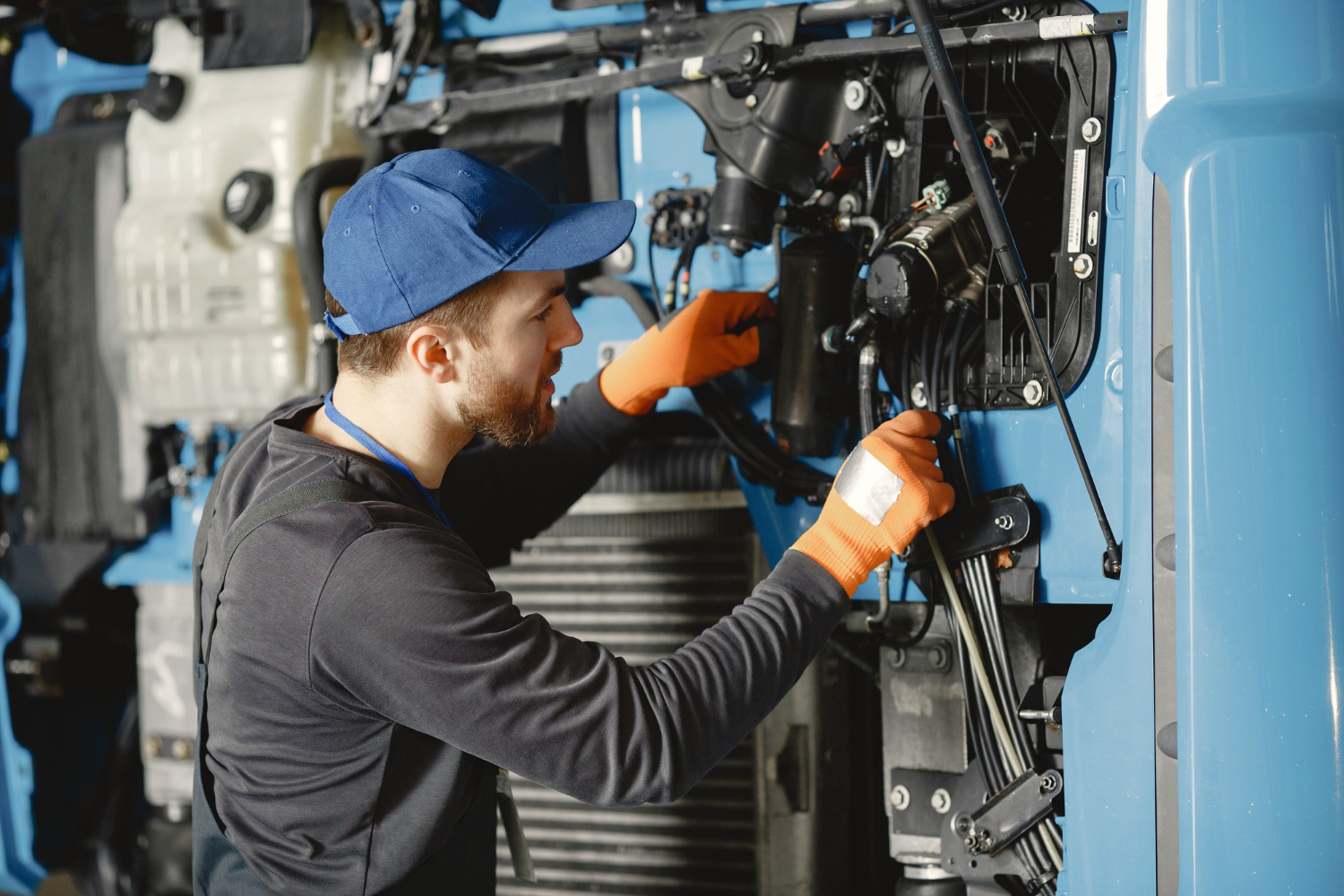
To succeed as an industrial maintenance technician, you need a mix of mechanical, electrical, and digital skills. Here's what actually matters on the job:
Mechanical troubleshooting. You need to read blueprints, understand how gearboxes and pumps work, and replace seals, bearings, and belts without destroying surrounding components. Hands-on equipment familiarity beats textbook knowledge every time.
Electrical fundamentals. Not advanced electrical engineering, but solid grounding in three-phase motors, contactors, and sensors. Many breakdowns have electrical causes. If you can't at least diagnose them, you're calling an electrician for every problem.
PLC programming basics. Programmable logic controllers run most modern industrial equipment. You don't need to build one, but you need to understand ladder logic and be able to upload diagnostic data. Employers increasingly expect this skill.
CMMS and predictive maintenance. Your CMMS is your job security. Software like SAP or Maximo logs every repair, tracks parts inventory, and flags equipment due for maintenance. Technicians who know how to use it and act on its data prevent catastrophic breakdowns.
Hydraulics and pneumatics. Hydraulic systems power many industrial machines. You need to know basic pressure, flow, seal maintenance, and contamination control. This skill is rare and commands a premium.
Problem-solving under pressure. When a production line stops, the cost is real (often thousands per hour). You're expected to stay calm, systematically eliminate possibilities, and fix it. That's the difference between a technician and someone who just changes parts.
Most of these skills are learned on the job or in formal training programs, not in high school. That's exactly why employers hire people with the right foundation (NCCER cert, basic electrical knowledge) and then teach them the equipment-specific stuff. Programs like Foundations of Automated Equipment Maintenance exist to give career-changers that foundation.
The industrial maintenance certification landscape isn't as rigid as electrician licensing, but it's structured. Here's the hierarchy:
CMRT (Certified Maintenance and Reliability Technician). This is entry-level. Offered by SMRP (Society for Maintenance and Reliability Professionals), the CMRT shows you understand maintenance fundamentals: reliability concepts, maintenance planning, and basic troubleshooting. Most employers expect it or want you to earn it in your first year. It's the credential that separates technicians from production workers.
CMRP (Certified Maintenance and Reliability Professional). This is the senior credential. It requires CMRT plus three years of field experience. CMRP is what you need if you want to move into supervision, planning roles, or consulting. It's respected across industries.
Vendor-specific certifications. Many employers require skills on their specific equipment. Compressor manufacturers (Atlas Copco, Rotary Screw), motor brands (ABB, Baldor), or PLC platforms (Siemens, Allen-Bradley) all offer training. These don't replace CMRT/CMRP but complement them. Employers often fund these certifications.
NCCER credentials in millwright, HVAC-R, and electrical. If you're transitioning from another trade, NCCER certifications in mechanical specialties help bridge your experience. Refrigeration technicians, for example, often move into industrial cooling maintenance.
EPA 608 (refrigerant handling). If you work on any system using refrigerants, you need this credential. It's specific but mandatory in many facilities.
The path for most people is straightforward: earn or work toward CMRT in your first year, gain three years of experience, then pursue CMRP if you want to advance beyond the technician level. Vendor certs come as needed based on your employer's equipment. Many employers fund certification study, so don't think of costs as a barrier.
Industrial maintenance technician salaries vary by industry, region, and experience. Here's the reality without speculation:
Early-career (apprentice or first-year technician): $40K, $50K. You're earning more than production but less than experienced trades. Some employers use the title "apprentice technician" or "maintenance helper" at this stage.
Mid-career (3-8 years, CMRT certified): $55K, $70K. You're trusted with complex diagnostics. You mentor newer technicians. You might specialize (electrical focus, hydraulics expert). This is where you can see real stability.
Senior technician (8+ years, possible CMRP): $65K, $80K. You're doing advanced diagnostics, training others, and possibly leading small teams. Some senior technicians work on commission or earn bonuses tied to uptime metrics.
Supervisory and planning roles: $75K, $95K+. Planning roles (maintenance scheduling, asset management) and shift supervisors command higher pay but are fewer positions. Moving into these roles typically means leaving hands-on work for more management.
These ranges shift by industry. Semiconductor and pharmaceutical manufacturing pay higher because the cost of downtime is extreme. Oil and gas refining pays more due to hazard premiums and shift work. Food and beverage manufacturing pays lower (the cost of downtime is also lower). Power generation and utilities occupy the middle tier with strong benefits.
Geography matters too. Industrial hubs (Texas, Ohio, California, Indiana) pay more because competition is fierce. Rural areas pay less but often have lower living costs. The salary progression itself is more important than the absolute number; your earning curve is steeper in maintenance than in most production jobs.

One of the strongest reasons to pursue industrial maintenance is the clear ladder. It's not like production work where experience doesn't necessarily lead anywhere. In maintenance, tenure and credentials compound.
Year 1-2: Foundation. You're a maintenance helper or apprentice. You're shadowing, learning equipment, earning your CMRT or equivalent foundation cert. Pay is $40, $50K. Your focus is hands-on skill and reliability.
Year 3-5: Specialist. You're now trusted with equipment zones. You might focus on motors, hydraulics, or electrical systems. You're earning $55, $65K. You're training new hires. Your CMRT is solid. Employers see you as promotable.
Year 6-10: Senior technician. You're doing advanced diagnostics, leading projects (reliability improvements, equipment upgrades), possibly earning CMRP. Pay is $65, $80K. You're the person senior management calls for complex problems. You might be approached about supervisory roles.
Year 10+: Supervisory, planning, or specialism. You move into maintenance supervision, reliability engineering, or equipment planning roles paying $75, $95K+. Alternatively, you go deep into a specialty (predictive maintenance software, robotic maintenance) and command premium rates. Some technicians become subject-matter experts for specific equipment and consult across multiple plants.
The path isn't automatic. You need to pursue training, show reliability, and be willing to cross-train into new equipment. But the opportunity is real. Manufacturing America employer networks show consistent demand for supervisors who came from the technician ranks because they understand the work and have credibility with the floor.
Join the Manufacturing America Alliance. Employers across the US are building pipeline agreements to hire and train the next generation of maintenance technicians. If you're ready to earn CMRT or CMRP credentials and step into a mid-career technical role, explore maintenance technician training and career paths through Unmudl. Manufacturing America connects working adults with proven employer-backed training and job placement support.
Certifications and Entry Routes: A Quick Comparison
The technician economy is hiring. Employers need people who can diagnose, repair, and improve their equipment. The certifications are clear. The salary progression is solid. The only question is whether you're ready to commit to the training and shift work that comes with the role.
If you're coming from production, HVAC, electrical, or even manufacturing management, you have a foothold. If you're changing careers from unrelated work, you'll need a structured foundation, but that foundation exists and is affordable. Either way, the path from technician to supervisor is real and takes roughly ten years if you pursue certifications and cross-training.
Your next step is to explore technician training programs and certifications that match your background and your region's employer needs. Manufacturing America's network of employers and training providers can connect you with a program that's employer-backed, leads to certifications, and most importantly, leads to a job offer.

As manufacturers reshore with smart automation, technician roles shift from assembly to systems troubleshooting. Explore skills gaps, training timelines, and hiring strategy.


Navigate reshoring finance: CHIPS Act grants, IRA tax credits, WOTC subsidies, and state programs explained. Maximize your manufacturing expansion ROI.

Build career pathways that reduce reshored-facility turnover by 40%. Learn succession planning, training ROI, and 24-month advancement strategies today.


.svg)