


You're comparing two markets for your next facility. You need to know what a CNC machinist actually earns in Des Moines versus Milwaukee. Or you're recruiting technicians and your HR team keeps losing candidates to shops across town that pay 15% more. Or you're a technician yourself, wondering if you're underselling your skills.
The problem is straightforward: wage data for manufacturing technicians is fragmented. BLS publishes occupational outlooks but doesn't break down pay by metro, facility automation level, or specific role in ways that support real hiring or retention decisions. Regional development boards post snapshots. LinkedIn shows ranges. Glassdoor has reviews. None of it is current for 2026 or coordinated.
This guide aggregates 2026 wage trends for manufacturing technicians across roles, regions, and automation facility types. If you're setting compensation strategy, benchmarking your labor costs, or deciding whether training investment makes sense, you'll find the data here.
Reshoring and supply-chain hardening have tightened technician labor markets across the United States. Median wages for manufacturing technicians have grown year-over-year since 2024, reflecting strong employer demand, a smaller candidate pool than pre-pandemic levels, and increased automation in production environments. Unlike general industrial labor, technician roles have seen sustained growth.
The manufacturing technician category spans several distinct roles: CNC operators and machinists; electrical and instrumentation technicians; and general maintenance technicians, automation technicians, and controls programmers. Each carries a different skill floor, credential requirement, and wage floor. A CNC machinist with 5 years of experience and NCCER certification commands different pay than an entry-level maintenance helper — and all of them are harder to find in 2026 than they were three years ago.
Several drivers shape advanced manufacturing pay trends today. First, reshoring is real: companies moving production back to North America need technicians now and can't wait months for new graduates. Second, automation adoption is accelerating — facilities deploying advanced robotics, servo drives, programmable logic controllers (PLCs), and predictive-maintenance systems need technicians who can diagnose and program, not just replace parts. That skill gap pushes wages up in facilities that have invested in smart manufacturing.
Third, regional variation matters significantly. Some metros have deep technician pipelines (Milwaukee, Appalachian Ohio, parts of Texas); others have tighter labor markets (the San Francisco Bay Area, Seattle, Southern California clusters), where employers pay more. Finally, facility age and automation status matter — an old automotive supplier running mostly manual assembly won't pay like a semiconductor-adjacent precision machining shop running collaborative robots with advanced control systems.
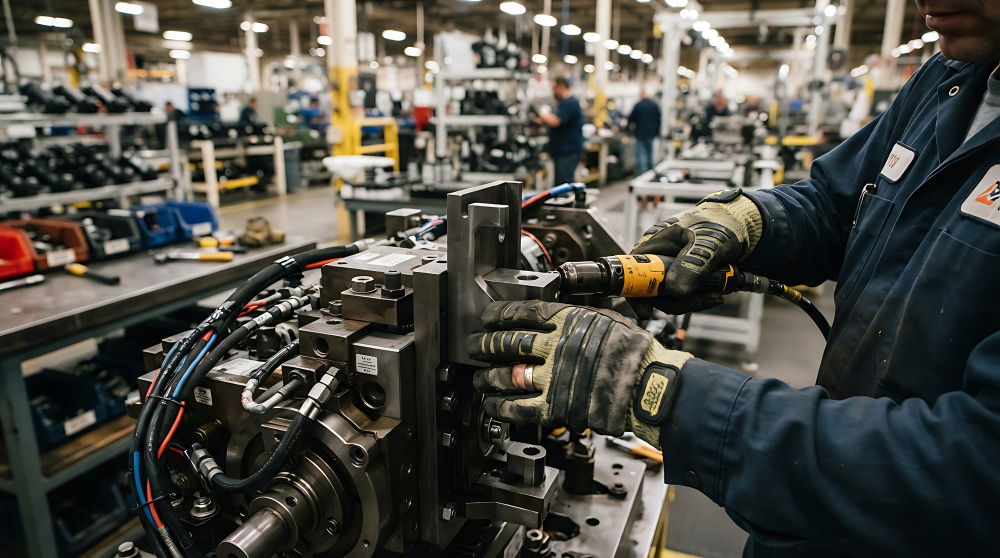
Manufacturing technician wages vary significantly by specialty. Here's what the data shows for technicians with 3–5 years of field experience and baseline certifications:
CNC machinists and operators. CNC (computer numerical control) machinists program and run precision cutting equipment that produces parts to tight tolerances. With 3–5 years of experience and NCCER certification, they typically earn $45,000 to $65,000. Specialists in five-axis programming or Swiss machines earn toward the top end or beyond.
Electrical and instrumentation technicians. Electrical technicians troubleshoot and maintain power distribution, control cabinets, and wiring; instrumentation technicians work with sensors, gauges, and data loggers. With NATE credentials and 3–5 years of experience, they typically earn $50,000 to $72,000, with automation-adjacent roles trending higher. Instrumentation and Control fundamentals training covers the PLC side for technicians moving into automation-heavy facilities.
Maintenance technicians (general and preventive). Maintenance technicians keep equipment running through scheduled maintenance, repairs, and troubleshooting. Preventive maintenance is higher-skill — it requires reading CMMS software, understanding lubrication, alignment, seal replacement, and sometimes vibration analysis. A general maintenance technician with MSSC CPT and 3–5 years of experience typically earns $42,000 to $62,000; those with SMRP or CMRP credentials are closer to $55,000 to $75,000.
Automation technicians (robotics and advanced manufacturing). Automation technicians install, program, and maintain robotic systems, conveyor controls, and integrated production lines. This is the highest-skill technician category and the fastest-growing: with robot-maker certifications and 3–5 years of automation experience, they typically earn $60,000 to $85,000. The Mechatronics and Robotics Maintenance course prepares technicians for this transition.
Data analyst technicians. Data analyst technicians work at the intersection of CMMS, production dashboards, and predictive analytics — pulling data from equipment sensors, flagging predictive-maintenance needs, and supporting continuous improvement. Entry specialists earn $48,000 to $68,000. The Data Analyst Technician path is becoming more common for technicians who want to move into this space.

Manufacturing is concentrated in specific regions — the Rust Belt, Texas, North Carolina, and Southern California host the deepest technician pipelines — but wages differ measurably by metro, driven by local supply, automation adoption, and cost of living.
Midwest metros (Milwaukee, Indianapolis, Cincinnati, Detroit area). Strong industrial heritage and large technician workforces. A CNC machinist earns around $48,000–$62,000; a maintenance technician around $44,000–$58,000. Automation-heavy facilities pay 12–18% above median, and Milwaukee has seen wage growth tied to reshoring in precision metalworking.
Texas metros (Houston, Dallas, San Antonio, Austin). Houston and the petrochemical corridor pay the highest for hazardous-environment technicians (those with EPA 608 or OSHA 30 earn more). Wages run 8–15% higher than Midwest equivalents, and Dallas and Austin have growing tech-adjacent manufacturing that pulls up automation and controls pay.
Mid-Atlantic and Northeast metros (Pittsburgh, Buffalo, Massachusetts). Aerospace, precision manufacturing, and defense-adjacent facilities. A maintenance technician in Pittsburgh earns closer to $50,000–$66,000; in Massachusetts, $54,000–$72,000. Security clearances and specialized certifications create premiums.
Southeast metros (Charlotte, Greenville SC, Nashville). Growth regions for light manufacturing, automotive assembly, and furniture. Wages are lower than the Midwest — entry-to-mid-career technicians earn $38,000–$56,000 — but new facility announcements are tightening supply and pushing wages up.
West Coast (California, Seattle, Portland). Tight technician labor markets and high cost of living push wages 20–30% above national averages. A CNC machinist in the Bay Area earns $58,000–$78,000, though these regions have smaller technician populations than the Midwest.
For wage-benchmark-by-region decisions, the Midwest offers the deepest labor pools and moderate wages, Texas offers growth and specialization premiums, and the coasts offer tight supply and high costs. Reshoring is beginning to reverse some regional differences as newer Southern facilities attract technicians and invest in apprenticeships.
Smart manufacturing facilities deploy advanced automation, predictive-maintenance systems, and data-driven optimization — and they consistently pay higher wages and retain technicians longer. The automation technician pay premium is real and significant.
Facilities with advanced robotics, servo-driven equipment, PLCs, and integrated data collection require technicians who troubleshoot complex interactions. A technician can't just replace a part; they need to understand control logic, read sensor data, and diagnose whether a failure is mechanical, electrical, or software. That skill set is rarer and commands premium pay.
This shapes training demand too. If you're entering the field, automation facilities are the place for career growth and wage trajectory. Technicians starting at an automation facility with mechatronics training move up faster and earn more over five years. Large employers like Amazon run advanced facilities using both instrumentation fundamentals and robotics maintenance training through Career Choice programs.
Wages are a primary lever on retention. In tight labor markets, wage strategy directly affects recruitment speed and technician quality. Technicians earning at or above their metro median have higher retention rates than those earning below; at or above the 75th percentile, retention improves further. But there's a nuance: technicians who see clear wage progression over 2–3 years are less likely to leave than technicians at high wage levels with no growth path.
Automation facilities do well on retention despite paying premiums — they attract higher-skill technicians, pay more, and offer clearer career progression. Traditional facilities often struggle because they pay low-to-moderate wages and offer limited growth paths.
For employers, the ROI is clear. A technician who leaves costs 50–100% of annual salary in recruiting, hiring, and training overhead. A technician retained for an extra 2–3 years pays for itself through reduced turnover alone, and experienced technicians troubleshoot faster, mentor newer hires, and reduce safety incidents. In tight metros, even a modest wage premium improves retention measurably; in loose metros, a 10–15% premium may be necessary. Benefits and development opportunities matter as much as hourly pay — technicians with access to training, flexible scheduling, and clear paths to management are stickier than technicians at higher-wage shops with no growth plan. Employers increasingly subsidize skill-development courses for incumbent technicians.
Wage benchmarking requires specificity. “Manufacturing technician salary” is too broad — you need role, region, facility type, and years of experience. Use multiple sources:
Update your benchmarks annually. Technician wages are moving in 2026 — what was competitive in 2024 might be below market now.
The manufacturing technician field is growing, wages are rising, and the path from entry to career technician is clearer in 2026 than it was three years ago. If you're considering a technician career, the data is straightforward: automation facilities pay more, offer better retention and career paths, and grow the fastest. If you're comparing regions, the Midwest still offers the most stable talent pools, while Texas, North Carolina, and parts of the South are tightening and offering growth. If you're already a technician, upskilling toward automation or data-analysis roles is the single best lever on wage growth.
The wage ranges in this guide are honest generalizations based on 2026 market data; your specific wage will depend on your experience, certifications, facility automation level, and local market. Now you know what to benchmark against — use it to negotiate with confidence, plan a regional move, or set competitive pay if you're hiring. Start with Technicians of America to explore role and wage visibility for your preferred technician path.

As manufacturers reshore with smart automation, technician roles shift from assembly to systems troubleshooting. Explore skills gaps, training timelines, and hiring strategy.


Navigate reshoring finance: CHIPS Act grants, IRA tax credits, WOTC subsidies, and state programs explained. Maximize your manufacturing expansion ROI.

Compare metro areas on technician availability, training ramp capacity, and total talent cost. Use Manufacturing America's data-driven scorecard to evaluate facility site selection.


