

.svg)
“Isn't hiring from a local talent pool easier than building a career development program?” That's what many facility managers ask when a reshored plant first opens. The pressure is real: get production online fast, fill technician roles now, prove return on investment before the next board meeting.
But here's what reshored facilities discover too late: hiring fast without a structured technician career pathway creates the opposite problem. Technicians learn the basics, then leave for positions with clearer advancement. Turnover explodes and training costs spike. Reopened plants that invest in structured career pathways from day one see 40% lower turnover and faster advancement to leadership roles. That difference — between a plant that thrives and one that hemorrhages talent — often comes down to one element: clarity. Technicians need to understand how they move from entry-level work to lead roles and into supervision.
When a manufacturing plant reopens after years offline, every hiring decision carries weight. Facility managers face pressure to fill roles quickly, train fast, and avoid further delays. But speed without structure leaves technicians adrift.
A technician career pathway is a documented roadmap showing how a new hire moves from entry-level through lead technician roles and into supervision. It answers the question every technician asks: “What's next for me here?” Without that answer, your best people walk to a competitor offering one.
Reshored facilities operate on compressed timelines — production must scale within months, and supply chains depend on it. That intensity creates an unusual opportunity: you're hiring people who want the discipline and structure of advanced manufacturing. They've often worked in adjacent trades or warehouses and are hungry for technical skill and wage growth. But they need to see it mapped out.
Consider the mechanics of a reshored plant's first year. Your first cohort arrives in month one or two, trains on equipment and your CMMS (Computerized Maintenance Management System), and starts preventive maintenance routines. By month three they're operational; by month six some are ready for specialization; by month twelve your first supervisors emerge. Without a career pathway, that progression is accidental. With one, it's strategic — you've built redundancy, identified bench strength, and turned training investment into retention.
The math is stark. Replacing a technician costs 50% to 200% of annual salary once you account for recruitment, training, and lost productivity. A technician earning $50,000 to $65,000 in a reshored facility costs $25,000 to $130,000 to replace. A structured career pathway that costs $3,000 to $5,000 per technician per year pays for itself within 24 months through retention alone.
Manufacturing technician career progression happens fastest when you define three clear rungs: entry-level technician, lead technician, and supervisor. Understanding each level helps you recruit for the right starting points and build promotion criteria that feel fair.
| Level | Time in Role | Key Certifications | Responsibilities | Wage Range |
|---|---|---|---|---|
| Entry Technician | 0–18 months | MSSC CPT, OSHA 10 | Routine maintenance, equipment basics, safety compliance, reading blueprints | $18–$26/hr |
| Lead Technician | 18–36 months | EPA 608, NATE, or specialty certs | Mentoring, troubleshooting, training docs, audits, equipment huddles | $26–$32/hr |
| Supervisor | 3+ years | CMRP or equivalent | Hiring, budgeting, compliance, scheduling, equipment & regulatory oversight | $65,000–$85,000/yr |
An entry-level technician typically holds an MSSC CPT (Certified Production Technician) or equivalent. They learn your equipment during a 6-to-12-week onboarding and master routine maintenance tasks — reading blueprints, following procedures, and flagging equipment issues — but don't yet troubleshoot independently or mentor others. At a reshored facility, entry technicians form the bulk of your initial hire and are your testing ground for cultural fit and aptitude.
A lead technician has 18 to 24 months on site and holds an EPA 608 certification (for refrigeration or air handling) or NATE certification (for HVAC systems). They troubleshoot independently, mentor new hires, perform more complex maintenance, manage work queues, and help with plant audits. Promotion to lead usually comes with a $2-to-$5-per-hour raise and often a shift differential. This role is critical for reshored facilities because it's where you prove you're serious about advancement.
A supervisor has 3 to 5 years of experience, often including time as a lead. They carry regulatory responsibility for maintenance schedules, training records, and safety compliance; coordinate with plant management; manage budgets; hire and evaluate technicians; and decide on equipment replacement or upgrades. They earn $65,000 to $85,000 annually depending on plant size. At a reshored facility in its third or fourth year, your first supervisors should come from your original entry-level cohort — if they don't, your pathway isn't working.
The ladder doesn't have to be rigid. Some technicians specialize as instrument technicians (control systems and sensors) or maintenance specialists (predictive maintenance or specific equipment). But each alternative path should have a clear entry point, mid-level credentialing, and advancement criteria. Unmudl's Instrumentation and Control Technician courses offer structured entry into that specialization.
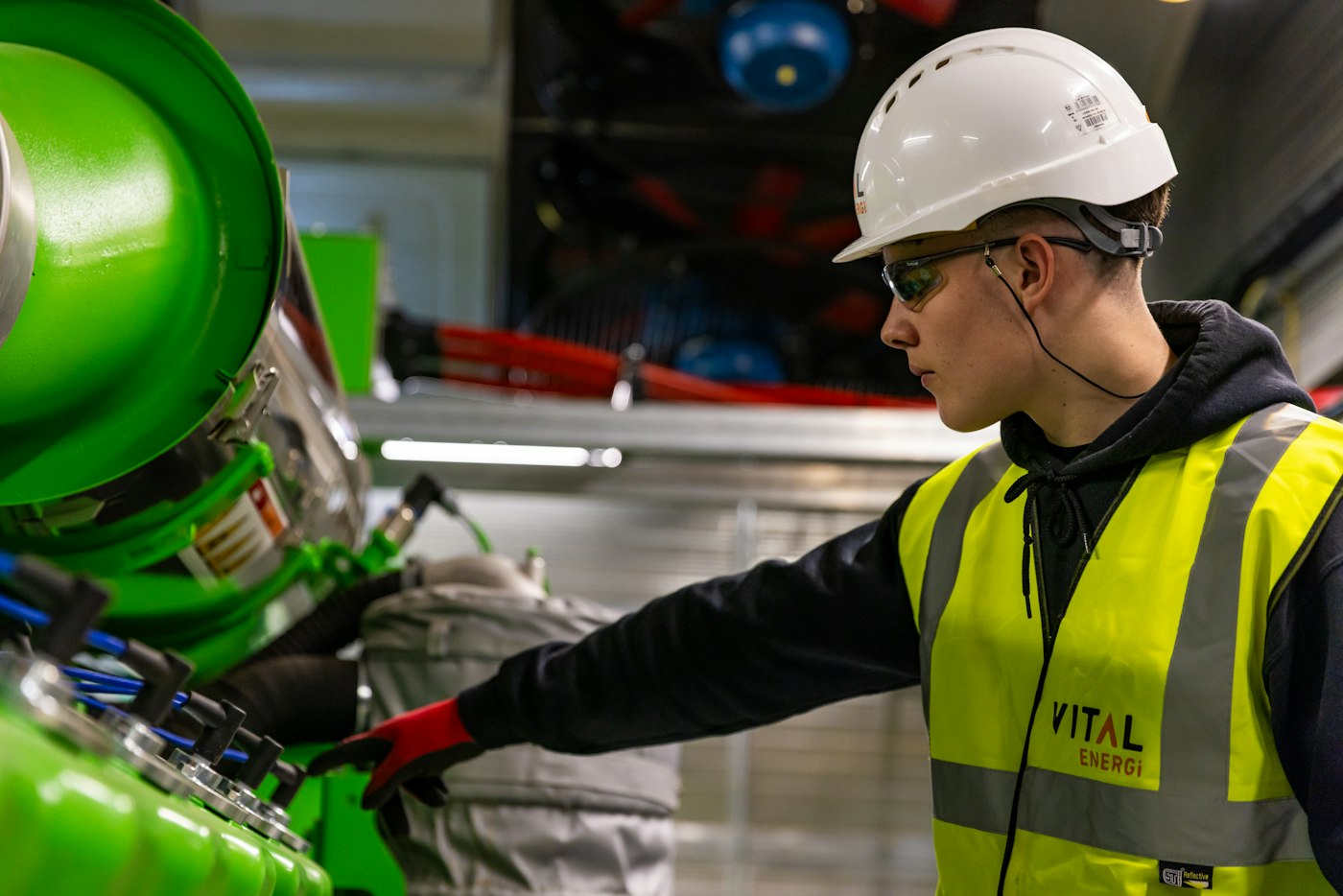
A plant-reopening training strategy that targets the first 24 months gives technicians and managers a shared benchmark for progress.
Months 1–3: Onboarding & safety mastery. New technicians complete facility-specific safety orientation, lockout/tagout (LOTO) procedures, and equipment-specific training. They earn or validate an OSHA 10 card and complete internal CMMS training. By the end of month three, an entry technician should handle routine preventive maintenance with minimal supervision. Success metric: zero safety incidents; ability to complete a full PM checklist independently.
Months 4–9: Skill specialization & certification. Technicians deepen skills in one area — electrical, hydraulic, pneumatic systems, or instrumentation — and pursue certifications aligned to your equipment (an EPA 608 takes 3–5 weeks; a NATE A/C certification 8–12 weeks). Some take Instrumentation and Control fundamentals courses to accelerate into control-systems work. Success metric: at least one recognized certification earned; demonstrated independent troubleshooting.
Months 10–18: Lead technician readiness & mentoring. High performers begin mentoring new cohorts, lead morning equipment huddles, assist with training documentation, and present in maintenance meetings — building the soft skills that separate technicians from leads. Some take data analyst technician courses to interpret equipment trends and CMMS data, making them invaluable in root-cause analysis. Success metric: mentored at least two new hires; identified and corrected a recurring issue through data.
Months 19–24: Promotion decision & leadership transition. By month 18, managers assess readiness for lead promotion; high performers move up with a wage bump and formal leadership training. Others may not be promotion-ready — and that's okay; they're still valuable as specialized technicians or shift leads. By month 24, every technician in your original cohort knows whether they're on a supervisory track or a deep-specialist track. No surprises. Success metric: first cohort of lead technicians successfully onboarding and mentoring the second cohort.

Understanding technician training ROI is essential for justifying pathway investment to finance and operations leadership. A new technician hire costs $4,000 to $8,000 in recruiting, onboarding materials, and initial training. During months one through three, productivity is below 50% of a fully trained technician; by month six you're at 75%; by month twelve, 90% or higher. That ramp costs your facility directly in equipment downtime, oversight hours, and re-work.
Now add advancement cost. Sending a technician to a four-week certification program (EPA 608, NATE, CMRP) costs $2,500 to $5,000 including tuition, travel, and lost-shift hours — though virtual-lab courses let technicians train during non-peak shifts and compress that cost. Over two years, a fully developed entry technician advancing to a lead role represents $12,000 to $18,000 in direct training investment. But a technician who stays three years (instead of leaving after 18 months) delivers that investment back in stable, productive labor, and one who stays five years and becomes a supervisor generates $40,000 to $60,000 or more in cumulative value through knowledge retention, mentoring, and reduced hiring cycles.
The alternative is catastrophic. Replace that technician twice and you've spent $50,000 to $260,000 in replacement costs, plus the productivity hit of disrupted operations — and at a reshored facility where equipment is brand-new and complex, a departure during ramp-up can delay production by weeks. Consider a concrete example: if your plant needs 12 entry technicians by month three and your pathway keeps 10 of 12, you've saved hiring and training for two replacements and maintained momentum. Lose 6 of 12 instead (typical turnover without pathways) and you've spent an extra $150,000 to $520,000, plus production delays that cost millions. Model it with a simple formula: (annual technician salary × replacement-cost percentage) × turnover rate = annual replacement cost, then compare to pathway investment. The payoff is almost always obvious.
Succession planning at reshored facilities requires identifying which technicians in your first cohort will become supervisors and department leads by year three or four — then deliberately building them. Start by hiring for potential, not just skills. During interviews, ask, “Tell me about a time you helped someone learn a new skill,” and listen for curiosity, patience, and clarity; these traits predict lead potential better than technical checklists alone.
Once on site, observe. Which technicians take ownership of problems beyond their direct task? Who asks questions that reveal systems thinking? Who mentors new hires informally? By month six, you should have identified two or three technicians from your first 12-person cohort who could become supervisors by year four. Invest in them deliberately with stretch assignments — running a morning huddle, auditing maintenance records, shadowing your plant manager during supply-chain planning — and get them into formal leadership training by year two. The specific format (external coaching, university-based programs) matters less than the message: “We see you as a future leader and we're making an investment.”
By year two, your succession bench should include two or three technicians ready to step into a supervisor role within 12 months. This redundancy is crucial: if one leaves, you have a backup; if you need a second supervisory position to support growth, you can fill it from within, and your junior supervisors already have peer relationships with the technicians they'll manage. A reopened plant's challenge is that everyone is new — you don't have a deep bench of 20-year veterans to draw from, so you must build one intentionally, starting in month six.
Reshored facilities succeed when they share lessons learned. Manufacturing America's employer networks bring together plant managers, HR leaders, and operations teams to benchmark succession planning, discuss wage strategies, and jointly source technician talent — or structure your development curriculum with Unmudl, a skills-to-jobs marketplace built for rapid technician advancement.
Join an employer networkYour technician retention strategy should commit to three specific levers that keep people from leaving during the critical first 24 months:

You don't need to invent your framework from scratch. Start with a template, adapt it to your facility, and iterate. A functional career-pathway template should include:
Keep it simple — a one-page template per role beats a 30-page manual no one reads. Share it with every technician on day one and update it annually. For training, lean on proven programs: Unmudl's technician training paths are structured so technicians progress through fundamentals, specialization, and leadership training without leaving your facility, compressing what used to take 18–24 months into 6–12 months — faster advancement and faster ROI.
You can't afford to lose another technician during ramp-up. The first move is simple: map out your career pathway on a single page, share it with every new hire on day one, and commit to the timeline. A technician who sees a clear path to $28/hr and a lead role within 18 months stays; one who sees a fog of uncertainty starts looking elsewhere. Most reshored facilities take 60 to 90 days to build their first pathway template and secure leadership buy-in, then 30 more to hire the first cohorts with advancement criteria in mind. By month six, your investment pays dividends in retention and productivity; by month 24, you've built a succession bench and your facility competes on career opportunity, not hourly wages alone. According to BLS employment projections, manufacturing technician roles remain stable through 2034, so early investment in talent development pays off. Work with Manufacturing America's employer networks to benchmark with other reshored facilities and build a development curriculum aligned to fast-track advancement. The facilities that thrive aren't the ones that hire fastest — they're the ones that keep their people.

As manufacturers reshore with smart automation, technician roles shift from assembly to systems troubleshooting. Explore skills gaps, training timelines, and hiring strategy.


Navigate reshoring finance: CHIPS Act grants, IRA tax credits, WOTC subsidies, and state programs explained. Maximize your manufacturing expansion ROI.

Manufacturers evaluate single-location reshoring vs. regional hub models across the U.S., Mexico, and Canada. Compare costs, supply-chain resilience, and workforce strategy.


.svg)